ServicesCalcium Removal and Tile Cleaning
Calcium Removal and Tile Cleaning in Guadalupe
That white or gray band at your waterline is calcium scale, and scrubbing rarely touches it. We remove it with methods matched to your tile, cover the deck and plants before we start, and leave the area clean when we pack up.
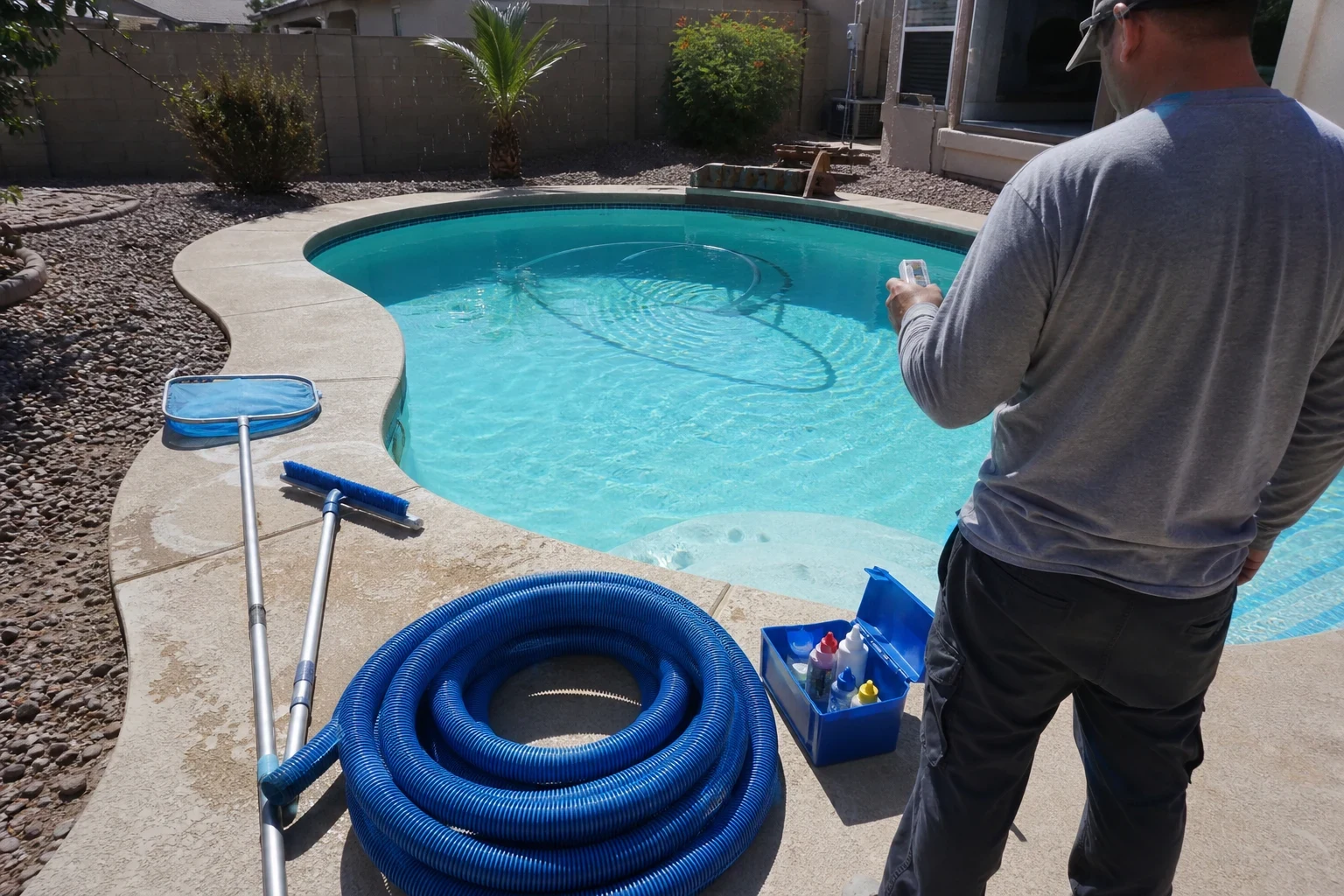
What calcium removal does for your pool
Every time pool water evaporates, the minerals stay behind. Our hard water carries plenty of calcium, and the hot sun pulls water off the surface fast, so a crust builds right at the tile line where the water rises and falls. It starts as a faint white film and, left alone, hardens into rough gray ridges that trap dirt and look stained even when the water is clear.
There are two kinds of scale. Calcium carbonate is white and flaky and often comes off with the right descaler and some hand work. Calcium silicate is gray, glassy and stubborn, and usually needs low-pressure media blasting to remove it without harming the glaze. We look at yours first and tell you which one you have before we suggest anything.
The messy part of this job is the media and the residue, and that is where we spend extra care. Your decking, coping, plants and equipment get covered, and we clean up the work area before we leave.
What the job includes
- A close look at the tile
- We check the scale type, the tile material and any loose or cracked pieces. Loose tile can pop off during cleaning, so we point it out first instead of finding out the hard way.
- Covering what we don't want touched
- Plastic and drop cloths go over the deck, nearby plants, the pool equipment and any furniture close to the edge. Media and splash stay where they belong.
- Scale removal matched to your tile
- Light carbonate deposits get a mild descaler and hand tools. Heavy silicate scale gets fine, low-pressure media blasting that lifts the mineral and leaves the tile glaze intact.
- Grout lines and coping edge
- Scale hides in grout joints and along the underside of the coping. We work those edges too, so the line looks even from across the yard.
- Cleanup before we go
- We vacuum media out of the pool, rinse and sweep the deck, and haul off our covers and debris. You should see clean tile, not traces of our visit.
- Water balance notes
- We check your calcium hardness and pH and explain what is feeding the buildup. If you'd rather not keep up with it, our weekly pool cleaning service has chemicals included in the monthly price.
Signs your tile needs calcium removal
A white ring that won't scrub off
If a brush and tile cleaner leave the band in place, the scale has fused to the surface. More scrubbing just wears you out.
Rough, gray ridges at the waterline
Hard, glassy buildup you can feel with your hand is usually calcium silicate. It thickens every season.
Tile that looks dirty with clear water
Scale grabs dust and pollen and turns brown or gray. The water can test perfect while the tile still looks neglected.
Crust on water features and spillways
Sheer descents, scuppers and spa spillovers collect scale fast because water spreads thin and evaporates there.
Scratchy edges where kids hold on
Heavy deposits get sharp. If swimmers are scraping elbows at the wall, it's time.
How a tile cleaning day goes
- 1
Free quote by phone
Call us, tell us about the pool and what the tile looks like, and we'll set a time to see it. You get a free quote and a straight answer on which method fits.
- 2
Prep and protection
On the day, we may lower the water a few inches to expose the full scale line. Then we cover the deck, plants and equipment before any cleaning starts.
- 3
Removing the scale
We work the tile section by section and check the glaze as we go. Stubborn spots get another pass instead of more pressure.
- 4
Cleanup and refill
Media gets vacuumed from the pool, the deck is rinsed and swept, and covers come off. We bring the water back up and walk the tile line with you so you can see the result.
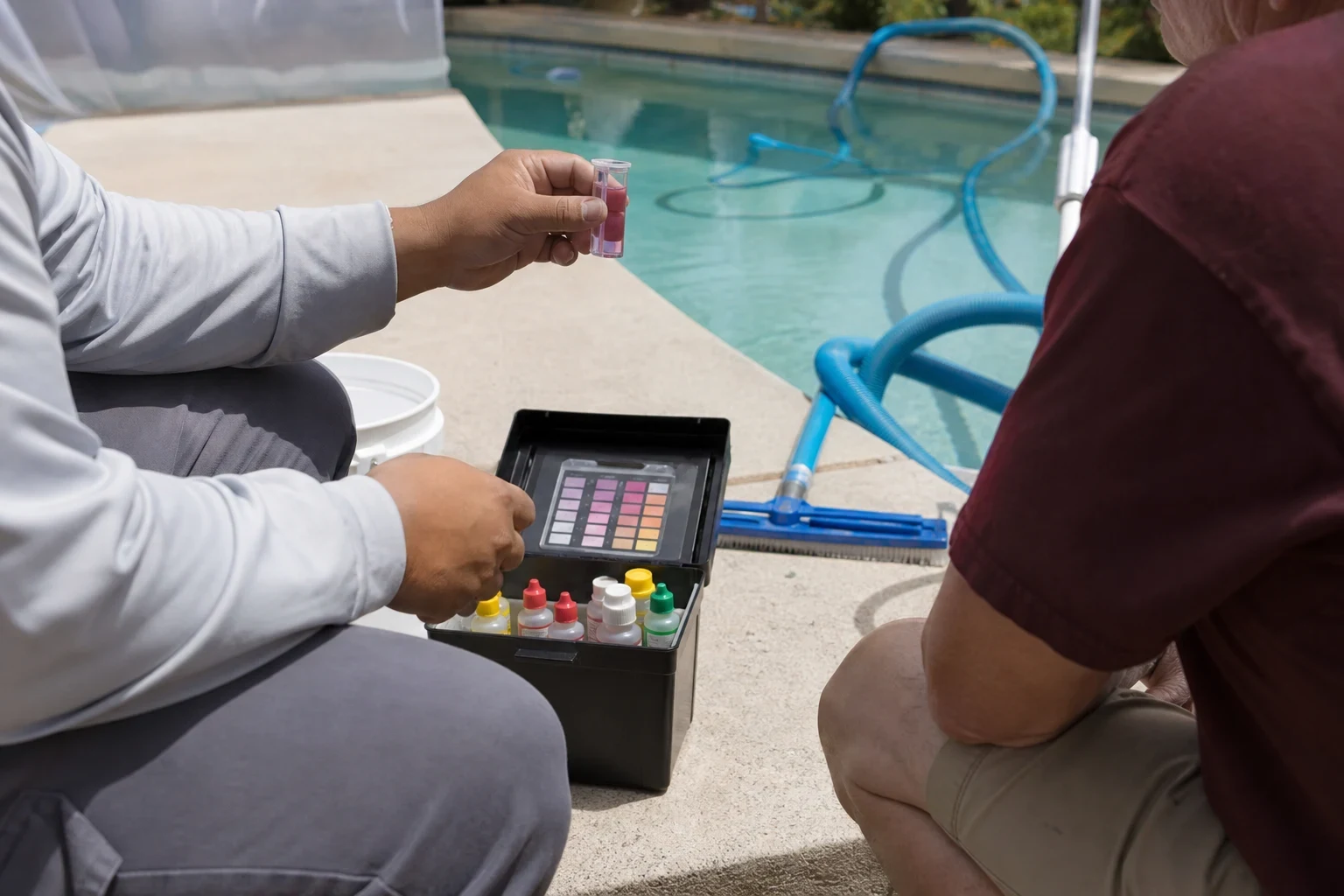
What affects the price
Tile cleaning is priced by the job, and we give you the number before we start. A few things make the work quicker or slower, and we'll explain which ones apply to your pool.
- Length of the tile line
- A bigger pool or one with a spa has more tile to clean. Curves and steps add edge work.
- Type and thickness of scale
- Light white carbonate goes faster than thick gray silicate, which needs blasting and more passes.
- Extras like water features
- Spillways, rock waterfalls and raised walls add surface and need more careful protection around them.
- Access and setup
- Tight side yards, landscaping right at the edge or furniture we need to cover all add prep time.
Calcium removal questions
Something not covered here? (480) 525-5014
Will blasting scratch my tile?
Not when it's done at low pressure with fine media suited to the tile. We test a small area first and watch the glaze as we work. Some older or softer tiles call for the gentler descaler method instead, and we'll tell you if yours is one of them.
Do you need to drain the pool?
No. We may lower the water a few inches so the whole scale line is exposed, then bring it back up when we finish. A full drain is only needed for plaster work like acid washes, which is a different service.
How messy is this going to be?
We cover the deck, plants and equipment before starting, and we vacuum media from the pool and rinse the deck afterward. The goal is that the only change you notice is clean tile.
How long until the scale comes back?
It depends on your water balance and how much water evaporates. Keeping calcium hardness and pH in range slows it a lot. Regular brushing during weekly service catches new film before it hardens.
Can I combine this with other work?
Yes. Many people pair tile cleaning with a pool drain and refill to bring down high calcium levels, or with filter cleaning. Ask when you call and we'll plan one visit.
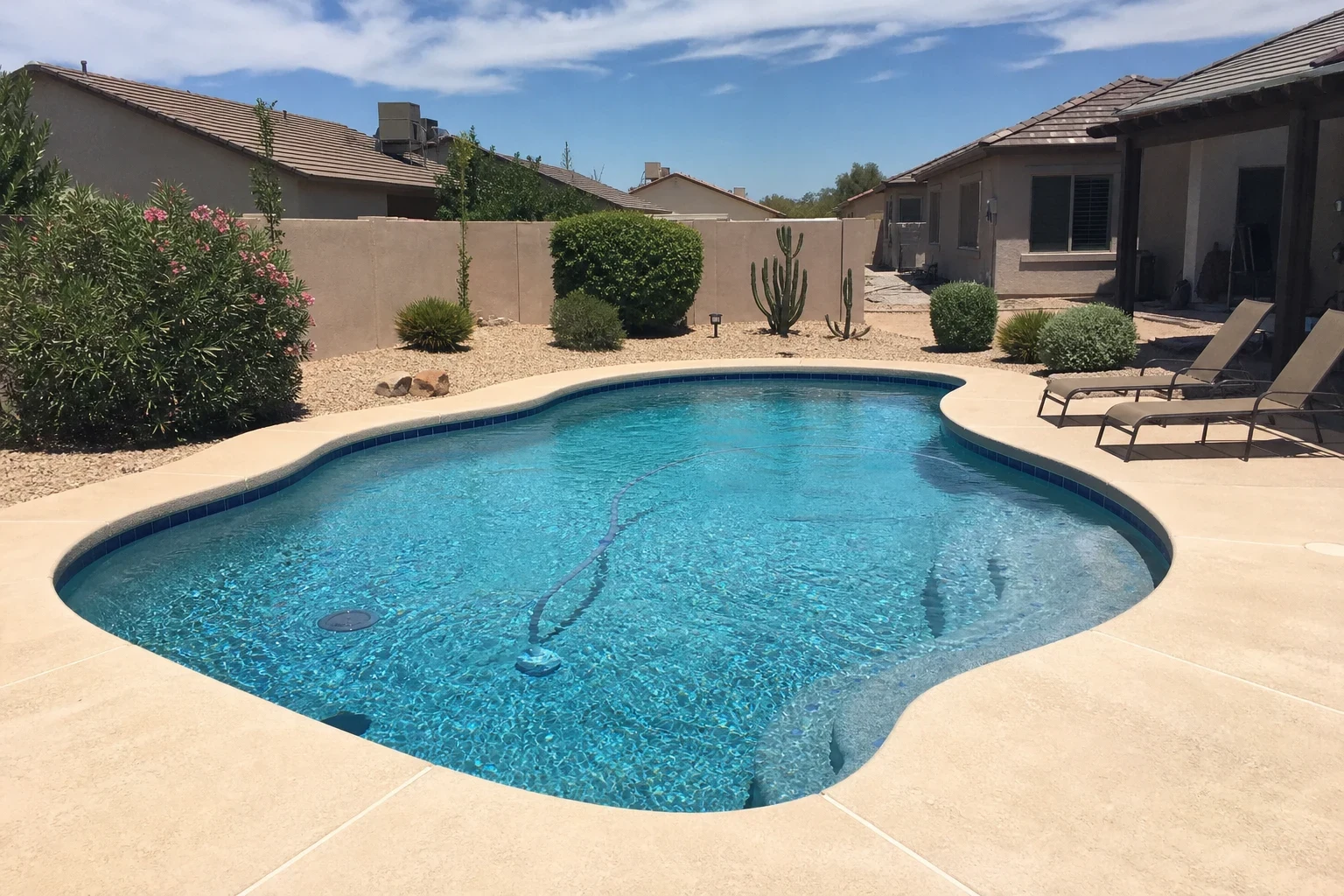
Get your waterline looking new again
Tell us what your tile looks like and we'll set up a time to see it. We cover your yard before we start and clean up before we leave.